How to Build An AI Trip Planner App? All You Need to Know
Ghanashyam Panda
Loading date...
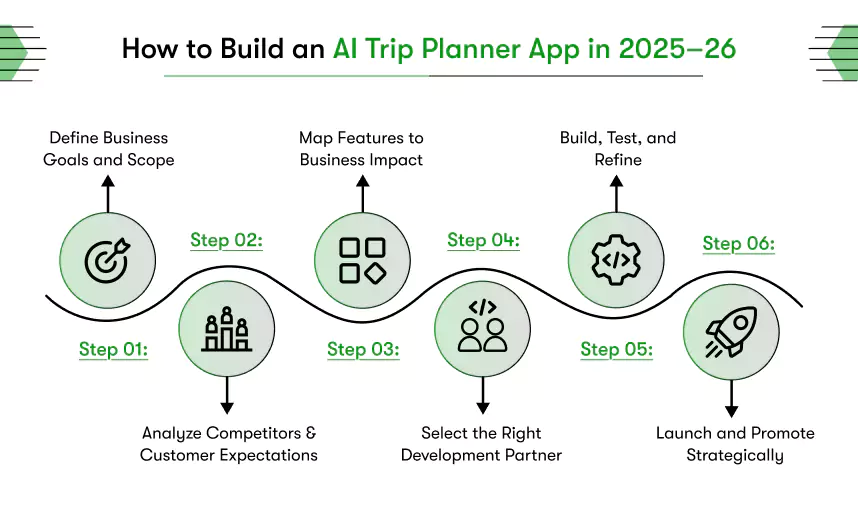
TABLE OF CONTENT
Introduction
Traveling to a new city or planning a vacation can be both exciting and overwhelming. From booking flights and accommodations to creating an itinerary that covers all the must-see spots, the logistics can quickly become a complex puzzle. This is where artificial intelligence (AI) comes in, revolutionizing the way we plan our trips. An AI trip planner app can act as a personal travel assistant, creating customized itineraries based on your interests, budget, and schedule. In this guide, we'll walk you through everything you need to know about building your own AI-powered trip planner.
Understanding AI Trip Planners
At its core, an AI trip planner leverages machine learning algorithms to analyze vast amounts of data, including user preferences, flight schedules, hotel availability, local attractions, and real-time traffic information. By understanding your unique travel style, the app can suggest personalized routes, activities, and dining options that you’re likely to enjoy.
Key Features to Include
To create a successful AI trip planner, you need to incorporate features that provide real value to your users. This includes personalized itinerary generation, real-time booking integrations, budget tracking, and collaborative planning tools for group travel. The ability to adapt to last-minute changes and offer on-the-go recommendations is also crucial for a seamless user experience.
Choosing the Right Tech Stack
Selecting the right technologies is a critical step that will influence your app's performance, scalability, and development speed. For an AI trip planner, you need a stack that is robust, flexible, and well-suited for integrating AI capabilities.
- Frontend: A framework like Next.js with React provides a powerful foundation for building a fast, server-rendered application. Paired with Tailwind CSS and a component library like ShadCN, you can create a beautiful and responsive user interface that works seamlessly across devices.
- Backend & Database: Firebase offers a comprehensive suite of tools that are perfect for a trip planner app. Use Firebase Authentication for secure user sign-in and Firestore as a scalable NoSQL database to store user profiles, saved itineraries, and preferences.
- AI Integration: To power your intelligent recommendations, you'll need a generative AI model. Genkit is an excellent choice for integrating with powerful models like Google's Gemini. It simplifies the process of sending prompts and receiving structured data, allowing you to easily generate personalized travel suggestions.
Step-by-Step Development
Building an AI trip planner involves several key stages. Here’s a high-level roadmap to guide you through the process:
- 1. Project Setup: Initialize your Next.js project and set up Firebase. Configure your `firebase.json` and security rules to ensure your data is secure from the start.
- 2. UI/UX Design: Design the core user interface components, including the trip input form, results display, and user authentication pages. Focus on creating a clean, intuitive, and mobile-first experience.
- 3. User Authentication: Implement sign-up and login functionality using Firebase Authentication. This will allow you to personalize the experience and save user-specific data.
- 4. AI Flow Integration: Set up your Genkit flow. Define the input schema (origin, destination, interests) and the desired output schema (a structured itinerary). Craft a detailed prompt that instructs the AI model on how to generate the best recommendations.
- 5. Frontend-Backend Connection: Create server actions in Next.js to call your Genkit flow from the frontend. Implement loading states and error handling to provide a smooth user experience while the AI is processing the request.
- 6. Deployment: Once your app is built and tested, deploy it using a platform like Firebase App Hosting or Vercel to make it accessible to users.
Conclusion
Building an AI trip planner is an exciting project that combines cutting-edge technology with a practical, real-world application. By leveraging the power of generative AI, you can create a tool that not only simplifies travel planning but also helps users discover new experiences tailored to their tastes. With the right tech stack and a clear development plan, you have all the ingredients you need to build a truly intelligent travel companion.